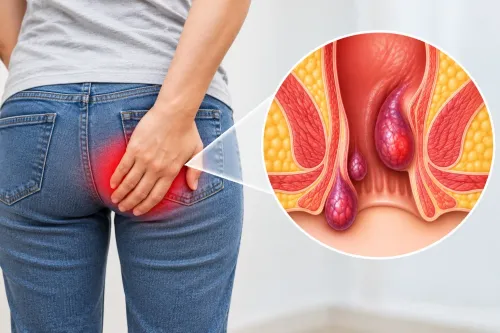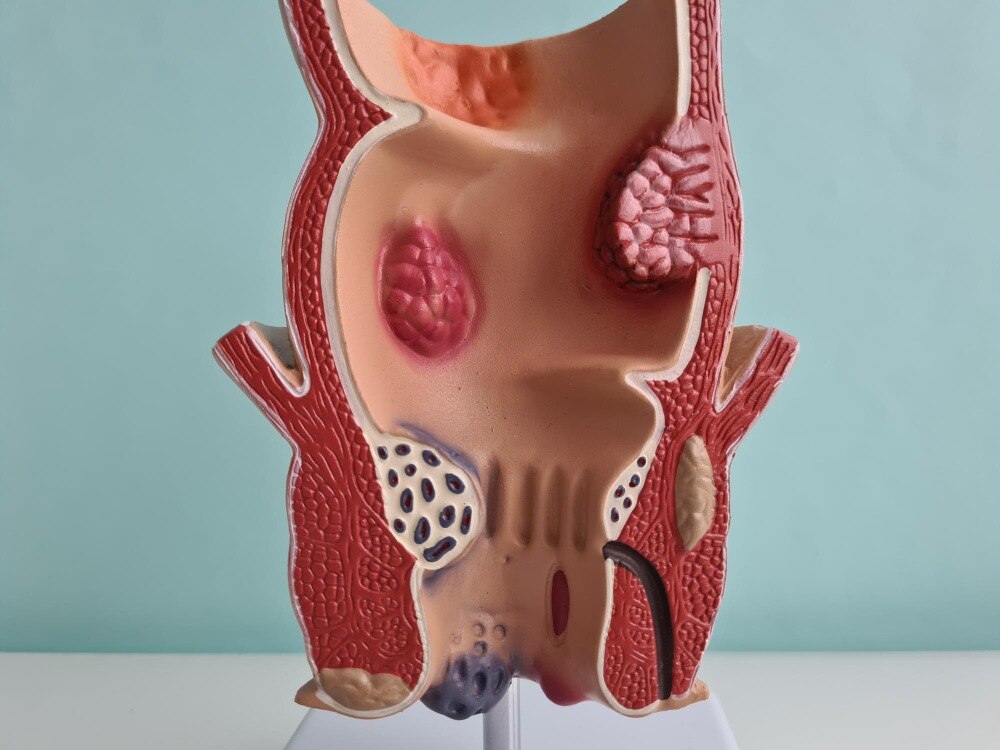
Bleeding that returns after treatment deserves an examination, especially when pain is persistent, severe, or affecting work, sleep, and bowel movements. By the end, you will know which findings point toward surgery, which treatments to try first, and what questions to ask before choosing an operation.
Key takeaways
- Get examined when bleeding returns after fibre, fluids, or medicines.
- Severe pain needs assessment for fissure, thrombosis, abscess, or strangulated prolapse.
- Confirm the bleeding source before choosing recurrent piles treatment.
- Compare recovery, pain, and recurrence before selecting piles surgery.
When recurring bleeding and pain need more than home treatment
Bleeding that returns after fibre, fluids, stool-softening treatment, or topical medicines deserves an examination rather than repeated self-treatment. Piles are more likely when bright-red blood appears with bowel movements and a lump or prolapse matches the pattern. Pain changes the picture: severe pain can indicate a fissure, thrombosed external pile, abscess, or strangulated prolapse.
The question “can piles surgery help recurring bleeding and pain” depends on the confirmed cause, hemorrhoid grade, symptom duration, and effect on daily life—not bleeding alone.
Seek urgent medical care if you have:
- Heavy or continuous rectal bleeding
- Dizziness, fainting, weakness, or a fast heartbeat
- Black, tarry stool rather than bright-red blood
- Fever, pus, rapidly worsening pain, or a tender swelling
- Inability to pass stool or urine
A clinician may inspect the anus, perform a digital rectal examination, and use anoscopy or proctoscopy. Persistent or unexplained bleeding can require sigmoidoscopy or colonoscopy to exclude polyps, inflammatory bowel disease, or colorectal cancer, especially with a changed bowel habit, weight loss, family history, or overdue screening.
Piles bleeding treatment is appropriate only after another source is reasonably excluded. Surgery becomes more relevant when grade III prolapse repeatedly returns, grade IV tissue cannot be pushed back, or symptoms continue despite appropriate office treatment; lighter cases often need non-operative care first.
How a clinician confirms the cause and decides whether surgery fits
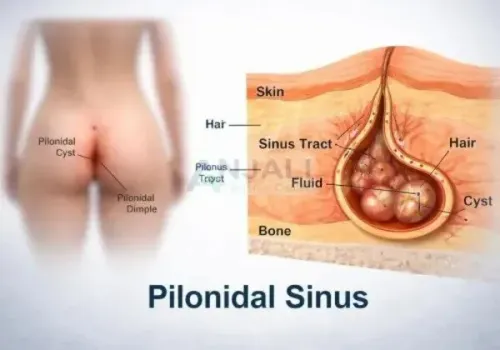
Bleeding alone does not decide when piles need surgery. The clinician first confirms that hemorrhoids are causing the symptoms and checks whether pain comes from a fissure, abscess, fistula, thrombosed external hemorrhoid, or another bowel condition.
1. You describe bleeding colour and timing, prolapse, pain, itching, constipation, straining, bowel-habit changes, previous treatments, and how symptoms affect work or sleep.
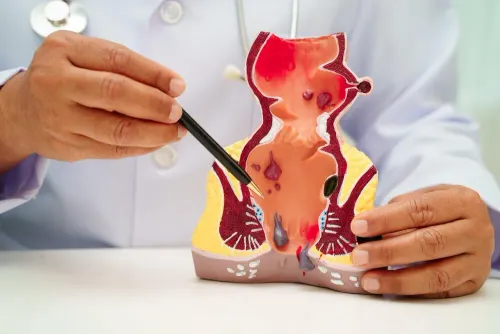
2. The clinician inspects the anus for external hemorrhoids, skin tags, fissures, swelling, discharge, or a bluish thrombosed lump. A digital rectal examination checks tenderness, masses, muscle tone, and other abnormalities.
3. An anoscopy or proctoscopy lets the clinician see internal hemorrhoids directly and grade them: grade I stays inside; grade II prolapses during straining but returns alone; grade III needs manual replacement; grade IV remains prolapsed and cannot be reduced. Repeated grade III prolapse and grade IV disease are common reasons to discuss an operation.
4. If bleeding is persistent, atypical, accompanied by anaemia or changed bowel habits, or not explained by the examination, the clinician may arrange colon evaluation, such as colonoscopy, to exclude polyps, inflammatory bowel disease, or colorectal cancer.
The decision then weighs prolapse, pain severity, bleeding frequency, daily-life impact, external disease, and response to fibre, stool-softening treatment, medicines, or office procedures. Surgery fits when symptoms remain troublesome or advanced prolapse persists after suitable nonoperative care—not simply because blood appeared once.
Which recurrent piles treatments should come before surgery
Fibre and stool-softening measures should come before an operation when examination shows no substantial prolapse or another surgical indication. The foundation of recurrent piles treatment is preventing hard stools, straining and long toilet sessions, because surgery cannot remove those mechanical causes. Fibre supplements can reduce ongoing symptoms and bleeding.
Start with these measures:
- Increase fibre through vegetables, fruit, pulses, whole grains or a fibre supplement, and drink enough fluid to keep stools soft.
- Avoid pushing, reading or using your phone on the toilet; leave when the urge has passed.
- Ask a clinician whether a stool softener or osmotic laxative suits you, especially if constipation continues.
- Use a short course of cream or suppositories for itching, swelling or discomfort. Steroid-containing products used repeatedly can thin or irritate the skin.
- Arrange review if bleeding continues beyond a short treatment course, returns frequently or occurs without clear prolapse. Piles bleeding treatment should not delay assessment for a fissure, polyp, inflammatory bowel disease or another source.
| Office treatment | Best fit | Limitation |
|---|---|---|
| Rubber-band ligation | Bleeding or prolapsing internal piles, commonly grades I–II | Does not correct a significant external component |
| Sclerotherapy | Smaller internal piles with bleeding | Less useful for substantial prolapse |
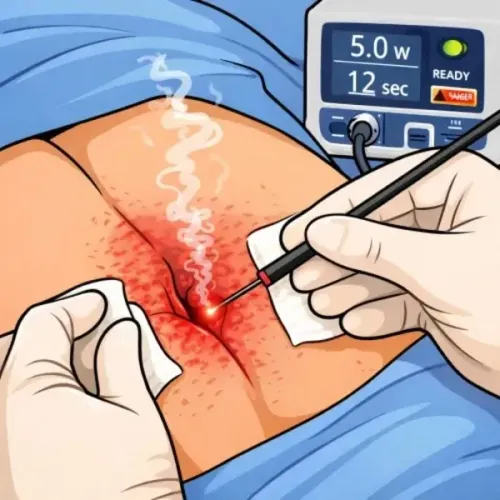
| Infrared coagulation | Limited bleeding from early internal piles | May not control advanced prolapse |
These options can control symptoms without a hospital operation, but repeated failure, grade III prolapse or irreducible grade IV disease changes the discussion.
How hemorrhoid operations differ in pain, recovery, and recurrence
Bleeding alone does not decide when piles need surgery. Repeated grade III prolapse that needs pushing back, grade IV prolapse that cannot be reduced, severe external disease, or symptoms that persist despite fibre, stool-softening treatment and office procedures are stronger reasons. The trade-off is pain and recovery versus durability.
| Procedure | Pain and recovery | Best fit and recurrence |
|---|---|---|
| Rubber-band ligation | Low pain; return to normal activity quickly | Bleeding or limited prolapsing internal hemorrhoids; recurrence can require repeat treatment |
| Doppler-guided artery ligation with mucopexy | Less early pain than excision; recovery is usually quicker | Internal bleeding with moderate prolapse; recurrent prolapse is more likely in advanced disease |
| Stapled hemorrhoidopexy | Less early pain than excisional surgery; faster recovery | Selected prolapsing internal hemorrhoids; it does not remove external disease, and recurrence is more frequent |
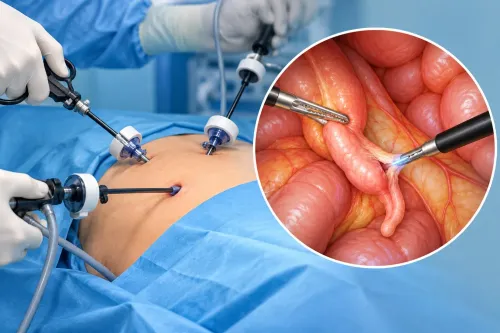
| Excisional hemorrhoidectomy | Most postoperative pain; recovery takes longer | Large external hemorrhoids, combined internal-external disease, or advanced prolapse after less-invasive treatment fails; generally the most definitive option |
| Excision of a thrombosed external hemorrhoid | Wound discomfort; recovery depends on clot size and timing | Severe, recent thrombosis in selected patients; older or milder clots often receive nonoperative care |
Recurrent piles treatment must match the dominant problem: bleeding, prolapse, external swelling, or a clot. A procedure that lifts internal tissue cannot correct a bulky external component, while excision is excessive for minor bleeding.
Surgery treats the tissue causing current symptoms, not the tendency to form new hemorrhoids. Constipation, straining and pregnancy-related pressure can lead to recurrence, so persistent symptoms need reassessment rather than automatic repeat surgery.
What to ask before choosing a hemorrhoid surgeon in Dombivli
Before consenting to an operation, ask what finding makes it necessary and whether the procedure targets bleeding, prolapse, external disease, or several problems. A hemorrhoid surgeon in dombivli should explain the grade after digital rectal examination and anoscopy or proctoscopy, not recommend surgery for bleeding alone.
Ask directly: can piles surgery help recurring bleeding and pain in my case?
- Which alternatives remain, including fibre, stool-softening treatment, office procedures, or observation?
- What will happen to pain, work, exercise, bowel movements, and wound care during recovery?
- What recurrence risk applies to your grade, and which constipation, straining, or prolonged toilet sitting habits must change?
- If bleeding returns, how will you check for a fissure, polyp, inflammatory bowel disease, or another source?
| Option | Best fit | Main trade-off |
|---|---|---|
| Doppler-guided artery ligation with mucopexy | Bleeding and moderate internal prolapse | Less early pain; advanced prolapse can recur |
| Stapled hemorrhoidopexy | Prolapsing internal tissue without a large external component | Less early pain; recurrent prolapse is more frequent than after excision |
| Excisional hemorrhoidectomy | Large external component or advanced, repeatedly prolapsing disease | More pain and recovery time; directly removes treated tissue |
Ask the clinician to connect the operation to your examination findings and daily-life impact. If you consult Dr Sharad Gurav Laparoscopic Surgeon - 9324545771, take the same questions and request the grade, alternatives, and recurrence estimate in writing. A second opinion is sensible when no examination or explanation accompanies the recommendation.
Related service
Piles Surgery Piles surgery is an effective solution for patients suffering from severe or recurring hemorrhoids that cause pain, bleeding, and discomfort. Dr. View service → |
Frequently asked questions
When do recurring piles need surgery?
Surgery becomes a consideration when bleeding or prolapse keeps returning despite fibre, fluids, stool-softening treatment, and appropriate non-surgical procedures. Severe pain requires diagnosis first because fissure, thrombosis, abscess, or strangulated prolapse can mimic piles.
How does a clinician confirm that piles are causing the bleeding?
The clinician reviews the bleeding pattern, pain, bowel habits, and prolapse, then examines the anus and rectum. Further testing is chosen when the findings do not clearly explain the bleeding or another bowel condition needs exclusion.
Which recurrent piles treatments come before surgery?
Treatment can begin with fibre, adequate fluids, stool-softening measures, and avoiding straining. Depending on the pile grade and symptoms, a clinician may discuss office procedures such as rubber-band ligation before an operation.
How do hemorrhoid operations differ in pain and recovery?
The main options differ in how much tissue is removed, postoperative pain, time away from normal activities, wound care, and recurrence risk. Ask which procedure suits your pile grade and what recovery restrictions apply.
What should you ask a hemorrhoid surgeon in Dombivli?
Ask how the diagnosis was confirmed, which non-surgical options remain, why a specific operation is recommended, expected pain and recovery time, warning signs, follow-up arrangements, and the surgeon’s experience with that procedure.
Keywords