Persistent tailbone discomfort deserves a diagnosis before you commit to pilonidal sinus treatment. By comparing the physical signs, urgency, treatment stages, recovery demands and recurrence trade-offs, you can judge whether treatment addresses the real source of your pain and whether intervention is worth the time and wound care.
Key takeaways
- Pain alone does not confirm pilonidal sinus disease.
- Seek same-day assessment for fever, pus, spreading redness, or rapidly worsening swelling.
- Keep the cleft clean and dry, and reduce prolonged sitting while awaiting assessment.
- Recurring disease needs a treatment plan matched to pits, abscesses, and flare frequency.
Does persistent tailbone pain actually point to pilonidal sinus?
Pain alone does not prove pilonidal disease. A bruised coccyx or coccydynia after a fall, pressure-related pain from prolonged sitting, and irritation from a skin condition can all hurt at the tailbone without forming a sinus.
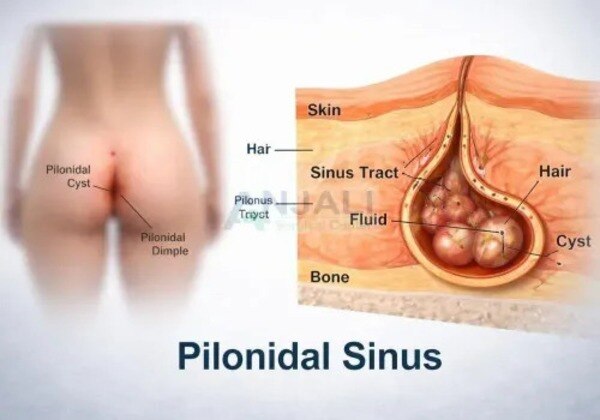
Inspect the natal cleft with a mirror and good light. Look for:
- One or more small midline pits or openings
- A tender lump within the cleft
- Warmth, redness or swelling
- Pus or blood-stained discharge
- A skin opening that closes and then repeatedly reopens
An anal abscess usually sits closer to the anus and can cause severe throbbing pain; an anal fistula may leave a recurring opening or discharge beside it. Hidradenitis suppurativa causes repeated painful nodules, boils or draining tunnels in skin folds, often with lesions beyond the cleft.
A bruised coccyx usually follows trauma and causes pain without pits, discharge or an inflamed lump.
A clinician usually confirms pilonidal disease by examining the cleft and nearby skin. Ultrasound or MRI is not routine; it is reserved for an atypical, deep, extensive or recurrent problem, or when an anal or deeper cause is possible.
The same assessment matters if you are searching for tailbone swelling treatment or pilonidal sinus treatment for persistent pain in Dombivli. Surgery is poor value when another condition causes the pain.
Which symptoms mean you need same-day assessment?
Same-day assessment is needed for an acutely worsening problem, not for every visible pit. An asymptomatic pit, infected abscess, draining chronic sinus and recurrent disease can share the same diagnosis but require different responses.
| State | Typical findings | Usual response |
|---|---|---|
| Asymptomatic pit | Small midline opening with no pain, swelling or discharge | Observation and routine review |
| Acute abscess | Rapidly enlarging, red, hot, severely painful, fluctuant lump | Same-day assessment; incision and drainage often comes first |
| Chronic draining sinus | Repeated pus or blood-stained discharge from an opening | Clinical review and discussion of elective treatment |
| Recurrent disease | Multiple flares, persistent drainage or repeated abscesses | Planned assessment after acute inflammation settles |
Seek same-day or urgent assessment for:
- Rapidly increasing tailbone swelling, severe pain, spreading redness or pus
- Fever, chills or feeling systemically unwell
- Difficulty sitting or walking because of the pain or swelling
A fluctuant, painful lump often needs incision and drainage. Antibiotics alone do not reliably empty a walled-off abscess or remove its sinus tract, and a clinician may add them when cellulitis, fever or systemic illness is present.
Do not squeeze or cut the lump. Do not wait for an elective appointment while infection is spreading. Urgent care is worthwhile because delay can increase pain and the extent of infection, but urgent drainage is not automatically definitive sinus removal. After inflammation settles, you can assess whether painful pilonidal sinus treatment is needed.
Tailbone swelling treatment may therefore be staged: drain the abscess first, then consider elective sinus surgery.
What can you try before surgery, and when are tablets not enough?
A quiet pilonidal sinus can often be observed. Wash the cleft gently, dry it thoroughly, reduce prolonged sitting and friction, wear breathable clothing, follow clinician-directed hair management, and use prescribed or recommended pain relief.
- Choose observation for an asymptomatic pit or occasional minor symptoms. Check for new swelling, redness, warmth, drainage or worsening pain.
- Arrange review when drainage repeats, abscesses recur, pain continues, or sitting becomes difficult. These patterns make elective painful pilonidal sinus treatment more reasonable.
- Do not rely on tablets for a tense, painful lump. Antibiotics do not reliably empty a walled-off abscess or remove an obstructed sinus tract; incision and drainage releases the trapped pus and treats the immediate pressure.
A clinician may add antibiotics when cellulitis surrounds the lump, you have fever or systemic illness, or diabetes, immune suppression or another relevant risk factor raises concern. Waiting for tablets while infection spreads can increase pain and tissue involvement. Conservative care avoids a surgical wound, but it requires monitoring and does not remove persistent disease.
If you are comparing pilonidal sinus treatment in Dombivli, ask whether the problem is an abscess needing drainage now or a chronic sinus suitable for planned treatment.
Which treatment option offers the fairest trade-off for your disease?
The fairest trade-off depends on disease extent, recurrence and your ability to manage a wound, not on the word “laser.”
| Option | Main appeal | Main trade-off |
|---|---|---|
| Observation | No wound, procedure or time off work | Suits an inactive pit; persistent drainage or repeated flares remain unresolved |
| Abscess drainage | Rapidly relieves a tense, infected lump | Treats the immediate collection, not necessarily the sinus; later treatment may be needed |
| Pit-picking | Small wounds, fewer dressings and faster recovery | Best for limited pits; recurrence or retreatment is possible |
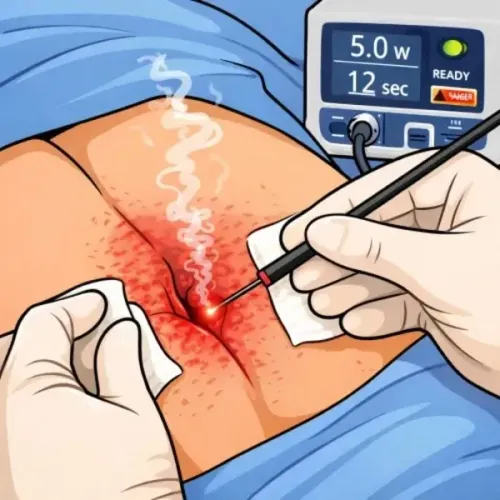
| Endoscopic or laser procedure | Small access points and potentially quick recovery | Results depend on tract extent and operator experience; long-term evidence is less certain than advertising suggests |
| Wider excision with open healing | Removes broader or branching disease without stressing a closure | Longer wound care and healing |
| Wider excision with primary closure or flap | Can shorten healing; a flap moves the scar away from the cleft | Infection, wound separation and recurrence remain possible, especially with midline closure |
For limited disease, pit-picking or an endoscopic or laser approach may offer the best practical balance. For extensive, laterally tracking or recurrent disease, wider excision or a flap-based off-midline reconstruction may be more reliable.
Open healing can avoid some closure problems but demands patience; if closed, the scar should generally sit off the midline, not directly in the natal cleft.
A consultation with Dr Sharad Gurav Laparoscopic Surgeon - 9324545771 can match the operation to disease extent, wound location, work demands and follow-up access. That matters whether you searched for pilonidal sinus treatment in dombivli or pilonidal sinus surgery near me.
Related services
Pilonidal Sinus Treatment Pilonidal sinus is a painful condition that can cause swelling, infection, and recurrent discharge near the tailbone area. Dr. View service → |
Laser Treatment for Pilonidal Sinus Laser Treatment for Pilonidal Sinus Laser Treatment for Pilonidal Sinus is a minimally invasive and highly effective procedure offered by Dr. View service → |
How do you decide whether treatment is worth it for persistent discomfort?
Treatment is worth it when confirmed pilonidal disease creates a recurring burden, not simply because a visible pit exists. Repeated flares, continuous drainage, recurrent abscesses, difficult sitting, disturbed sleep, missed work or daily dressing changes all strengthen the case for elective treatment.
| Situation | Practical choice | Why |
|---|---|---|
| Inactive pit, no infection, little disruption | Observation | Surgery may create more burden than the disease |
| Confirmed recurring sinus with drainage or flares | Discuss elective treatment | Removing the source can reduce repeated disruption |
| Painful abscess with swelling, pus or fever | Same-day assessment and possible drainage | An abscess often needs drainage before definitive sinus treatment |
At consultation, ask:
- Is the pain definitely coming from pilonidal disease, or could it be coccydynia or another condition?
- Does an abscess need drainage now?
- What wound will the proposed procedure leave?
- How long will dressings and time away from work last?
- Will the closure sit off-midline rather than in the cleft?
- What is the plan if symptoms recur?
Observation remains reasonable for an inactive pit without infection or meaningful interference. People searching for pilonidal sinus treatment for persistent pain in Dombivli or pilonidal sinus surgery near me should use those terms to find an assessment, not select an operation before diagnosis.
Treatment is worthwhile when it removes a confirmed, recurring burden; surgery is poor value when it is being used to explain unexplained tailbone pain.
Frequently asked questions
Does persistent tailbone pain actually point to pilonidal sinus?
No. A bruised coccyx, coccydynia, prolonged sitting, and skin irritation can cause similar pain. Pilonidal disease is more likely with a tender lump, drainage, redness, or visible pits in the cleft.
Which pilonidal sinus symptoms need same-day assessment?
Seek same-day care for fever, pus, rapidly increasing swelling, spreading redness, severe pain, or difficulty sitting and walking. These signs can indicate an abscess or spreading infection.
What can you try before pilonidal sinus surgery?
Keep the area clean and dry, avoid prolonged sitting, wear loose clothing, and use pain relief only as directed. Tablets do not remove an abscess or persistent sinus tract.
Which treatment option offers the fairest trade-off for pilonidal disease?
Treatment depends on whether you have an acute abscess, a single sinus, or recurrent disease. Drainage treats an abscess, while procedures that remove or open sinus tracts address persistent disease.
How do you decide whether pilonidal sinus treatment is worth it?
Compare your flare frequency, drainage, time lost from work or sitting, wound-care demands, recurrence risk, and recovery time with the likely benefit. Persistent or recurrent symptoms deserve a surgical assessment.
Keywords