A painful swelling near the tailbone that repeatedly becomes infected is more than just a minor skin problem. For many people, it turns out to be a pilonidal sinus a condition that can cause ongoing discomfort, drainage, and frequent abscess formation. While temporary relief is possible with medicines or drainage procedures, the problem often returns if the sinus tract is not treated properly.
With advances in minimally invasive surgery, Laser Treatment for Pilonidal Sinus has emerged as an effective option for selected patients. It aims to treat the underlying sinus while reducing tissue damage and supporting a smoother recovery compared to traditional surgical methods.
What Is a Pilonidal Sinus?
A pilonidal sinus is a small tunnel that develops beneath the skin, usually in the cleft between the buttocks near the tailbone. Hair, dead skin, and debris can collect inside this tract, leading to repeated infections and abscesses.
Although anyone can develop the condition, it is more commonly seen in:
- Young adults
- People who sit for long hours
- Individuals with excessive body hair
- Those with a family history of the condition
- People who experience repeated friction in the tailbone area
Without proper treatment, the sinus may continue to become infected over time.
Symptoms That Suggest a Pilonidal Sinus
Many patients ignore early symptoms until the condition becomes painful. Seeking medical advice at the first signs can help prevent repeated infections.
Common symptoms include:
- Pain near the tailbone
- Swelling or redness
- Pus or blood-stained discharge
- Foul-smelling drainage
- Fever during active infection
- A small opening or pit in the skin
Symptoms often improve temporarily after antibiotics or drainage but tend to recur because the sinus tract remains untreated.
Why Does the Condition Keep Coming Back?
One of the most frustrating aspects of pilonidal sinus disease is recurrence. This usually happens because the underlying tract continues to trap hair and bacteria, allowing infection to develop repeatedly.
Contributing factors include:
- Prolonged sitting
- Poor local hygiene
- Excess body hair
- Obesity
- Repeated pressure on the tailbone area
Addressing these factors alongside surgical treatment can reduce the chances of future problems.
How Does Laser Treatment Work?
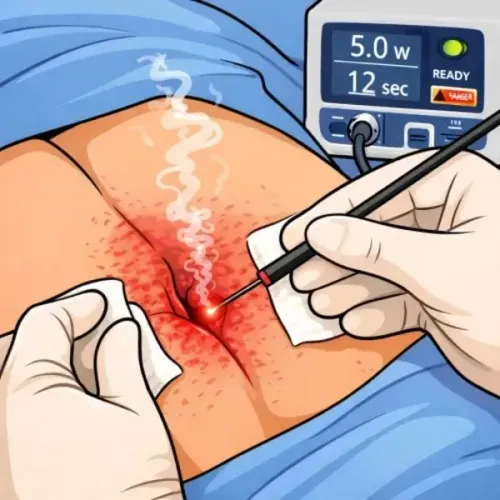
Laser treatment is a minimally invasive technique that targets the sinus tract from within. After cleaning the infected tract, a laser probe is used to seal and destroy the diseased tissue while preserving the surrounding healthy skin.
Because the procedure involves minimal cutting, patients often experience less postoperative discomfort and quicker healing compared to conventional wide-excision surgery.
However, laser treatment is not suitable for every case. The choice depends on the size, complexity, and extent of the sinus, which can only be determined after proper examination.
Benefits of Laser Treatment
For appropriately selected patients, laser treatment offers several potential advantages:
- Smaller surgical wounds
- Less postoperative pain
- Reduced bleeding
- Faster wound healing
- Earlier return to work
- Lower disruption of surrounding tissues
- Improved patient comfort during recovery
These benefits have made laser treatment an increasingly popular option in modern colorectal surgery.
Caring for Yourself After Treatment
Successful recovery depends not only on the procedure but also on proper postoperative care.
Patients are generally advised to:
- Keep the area clean and dry.
- Avoid prolonged sitting during early recovery.
- Remove excess hair as advised by the surgeon.
- Wear loose-fitting clothing.
- Follow wound care instructions carefully.
- Attend follow-up visits to monitor healing.
Maintaining good hygiene and preventing hair accumulation are important steps in reducing recurrence.
Frequently Asked Questions
Can a pilonidal sinus heal without surgery?
While an acute infection may temporarily improve with medicines or drainage, the sinus tract usually remains. Definitive treatment is often required to prevent repeated infections.
Is laser treatment painful?
Most patients experience less postoperative discomfort than with traditional surgery because laser treatment minimizes tissue trauma.
How soon can I return to work?
Recovery varies depending on the individual and the complexity of the condition, but many patients resume routine activities earlier than with conventional procedures.
Will the sinus return after treatment?
Although no treatment can guarantee zero recurrence, appropriate surgical management combined with good postoperative care significantly reduces the likelihood of the condition returning.
Patients in Dombivli, Maharashtra, increasingly seek minimally invasive solutions for recurrent pilonidal sinus because they value quicker recovery and reduced postoperative discomfort. Dr Sharad Gurav Laparoscopic Surgeon evaluates each patient individually to determine whether laser treatment is appropriate based on the extent of the disease, previous infections, and overall health. The provider focuses on personalized treatment planning and long-term disease management rather than simply treating the immediate infection.
Ignoring a pilonidal sinus often leads to repeated pain, abscess formation, and interruptions to daily life. Consulting a specialist early helps patients receive an accurate diagnosis, understand all available treatment options, and benefit from modern surgical techniques. For suitable candidates, Laser Treatment for Pilonidal Sinus offers an effective approach that supports healing while helping patients return to their normal routines with greater comfort and confidence.
Keywords